
Florida Public Records Law
Florida's open-records framework runs on Florida Statutes Chapter 119, the state public records law. It sets the policy that state, county, and city agency records are open unless a specific exemption applies. It covers inspection, copying, response duties, fees, exemptions, and enforcement. The Florida Attorney General publishes an open-government resource that explains the law in plain terms.
Anyone can request a public record, and a requester does not have to give a reason or a name in most cases. Court records follow a separate court-branch rule, Florida Rule of General Practice and Judicial Administration 2.420, which sets confidential categories for case files. That split is why a county deed is handled one way and a court file another.
The Florida Attorney General open-government resource explains the public records law.
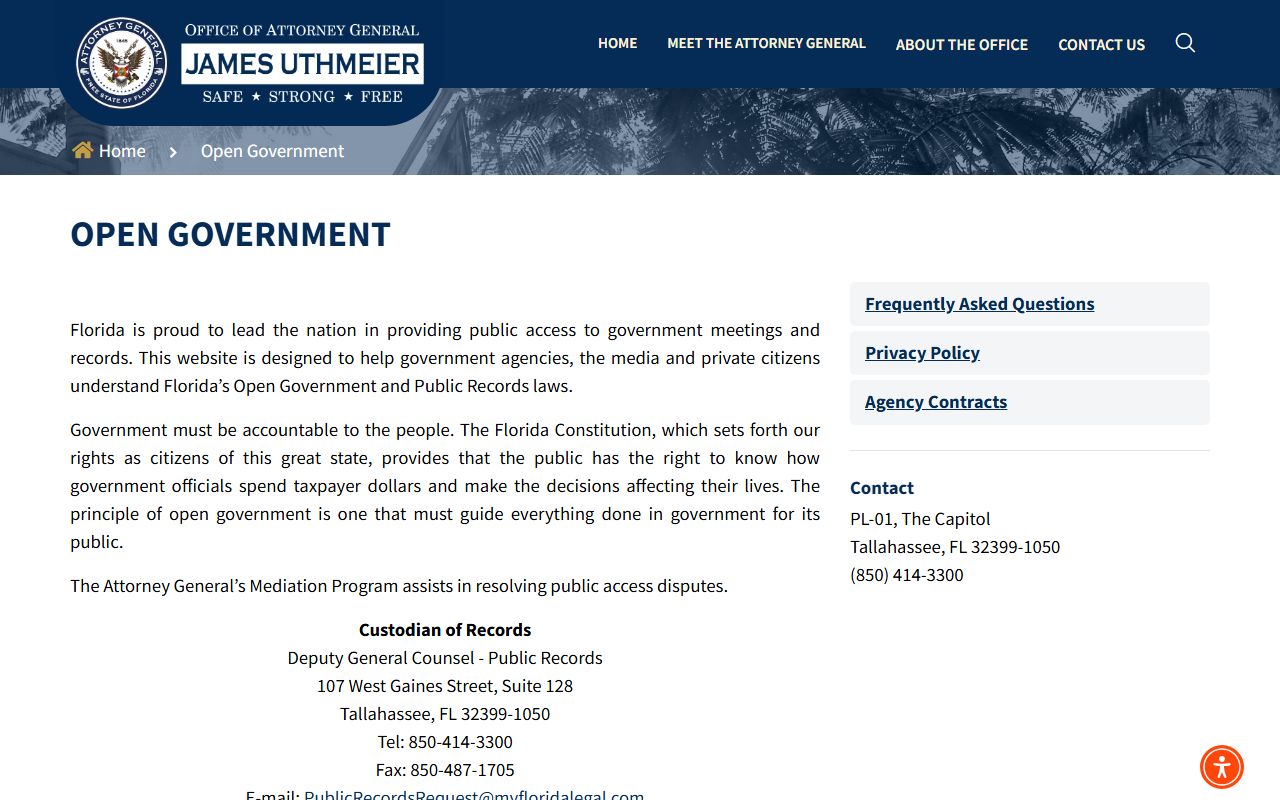
The resource is a useful starting point for understanding what counts as a public record in Florida.
What Records the County Clerk Maintains
The Orange County Clerk of the Circuit Court and Comptroller keeps a wide range of records beyond court files. The clerk records official documents, processes marriage licenses, and runs the my eClerk online system. Other county and city offices hold their own records, such as property and tax data. A request goes to whichever office holds the record.
- Court case records across civil, criminal, family, probate, and traffic.
- Recorded documents such as deeds and liens.
- Marriage license applications and recorded marriage records.
- Court financial records, case balances, and registry funds.
- Form packets and hearing schedules through my eClerk.
How to File a Public Records Request in Orange County
A request can be simple. Identify the office that holds the record, describe what you want clearly, and choose a way to submit. The county and its agencies accept requests by mail, email, and in person, and many offer an online channel. A clear description speeds the response.
- Identify the right office, such as the clerk for court and recorded records.
- Describe the records you want with names, dates, or case numbers.
- Submit by mail, email, an online portal, or in person.
- Wait for the office to locate and review the records.
- Pay any copy or labor fee, then receive the records.
Public Records Request Details
A request does not need a special form, but a clear request includes a few basics. The more specific the description, the faster the office can find the record. The table below shows what to include in a request.
| Item | Required | Notes |
|---|---|---|
| Description of records | Yes | Names, dates, case numbers, or document type |
| Contact information | Helpful | So the office can reach you with the cost or records |
| Date range | No | Narrows a large search |
| Format preference | No | Paper or electronic copy |
Response Timelines
Florida law requires an agency to respond in a reasonable time and to acknowledge a request promptly. There is no fixed deadline in days, but the agency cannot delay without good reason. A large or complex request can take longer, since staff must locate records and redact any exempt material. The office should tell the requester about any cost before it does the work.
Public Records Fees in Orange County
Agencies can charge for copies and, for large requests, for staff time. Amounts are set by state law and agency policy, so confirm the cost with the office before it begins. The table below shows how each charge is set rather than a fixed amount.
| Charge | How It Is Set |
|---|---|
| Per-page copies | A per-page rate set by law |
| Extensive use of staff time | A labor charge for large or complex requests |
| Certified copies | A certification charge plus a per-page rate |
| Electronic copies | The actual cost of the medium, if any |
Records That Are Exempt
Not every record is open. Florida law lists exemptions for safety and privacy. Court files follow Rule 2.420, which blocks juvenile, adoption, mental-health, and sealed material. Personal data such as Social Security numbers, bank accounts, and protected addresses is redacted. An agency must point to a specific exemption when it withholds a record, and it can redact the exempt part while releasing the rest.
If Your Request Is Denied
A requester who believes a denial is wrong has options. Ask the agency to cite the exact exemption it relies on. The Florida Attorney General publishes open-government guidance that explains rights and remedies. A person can also seek help in court to enforce the public records law. Keeping a written record of the request and the response helps if a dispute follows.
Court Records vs. County Records
Two different rules govern access in Orange County. Court case files follow the judicial-branch rule, Rule 2.420, and are searched through the clerk's my eClerk system. Other county records, such as deeds, agency documents, and many sheriff administrative files, follow Chapter 119. The split matters because the same office may hold both kinds, but the access rule depends on the record type.
A court docket can be public while a court document is blocked. A county agency record can be open in full unless an exemption applies. Knowing which rule applies helps a requester aim at the right office and the right process.
Sheriff and Jail Records
Law enforcement records fall under the public records law, with exemptions for active investigations and safety. The Orange County Sheriff's Office posts arrest and warrant information, and Orange County Corrections posts the jail roster and booking data. Some administrative records can be requested under Chapter 119, while active case files may be withheld until a matter closes. For custody data, the inmate records page covers the jail roster, which updates every 30 minutes and lists people in custody now.
Orange County Public Records Questions
Do I have to give a reason for a request?
No. Florida law lets anyone request a public record without stating a reason, and in most cases without giving a name. The office can ask for enough detail to find the record. It must point to a specific exemption if it withholds any part of a record.
How fast must the county respond?
Florida law requires a response in a reasonable time and prompt acknowledgment. There is no fixed day count. A large or complex request can take longer, since staff must find records and redact exempt material before release.